





HASTA - OUR STRATEGY
Sustainability
“We humans have the joy of managing our planet, but only for a very small part of its history. During that time, we must create good opportunities, not just for ourselves, but also for future generations. Instead of plundering and destroying, we should nurture and develop.”
– Stefan Schörling, founder of Hasta






For us at Hasta, a sustainable way of working naturally includes our environmental responsibility. As a company, we also have a social responsibility towards employees, customers, and other stakeholders. But it is also about more than the survival of our own organisation. It is about being able to make a difference in a larger perspective. Therefore, we want the sustainability perspective to be clear in all parts of the production chain and for the circular way of working to be a natural part of our brand.
Our vision is that a sustainable way of working should permeate all parts of our operations and contribute to positive development both within and outside our organisation.
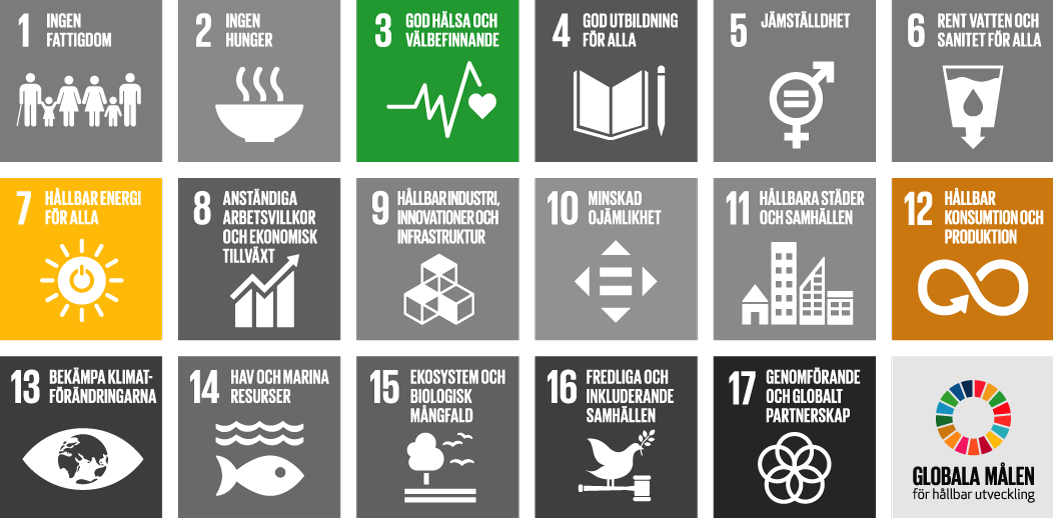
The Global Goals
Hastas' sustainability strategy is based on Agenda 2030 – a universal agenda for sustainable development adopted by all UN member states in 2015. The agenda contains 17 separate goals to be achieved by 2030 that aim to eradicate extreme poverty, reduce inequalities, promote peace and justice, and solve the climate crisis.
In our sustainability strategy, we have selected three of these goals as focus areas. With our strategy, we thus focus on the areas where we see that we can do the most good and also ensure that we contribute to the global goals.
Hastas' sustainability strategy also includes information on how we as a company work, both short-term and long-term, to incorporate all aspects of a sustainable way of working into our organisation – environmentally, socially, and economically.
Target 3: Good health and well-being
This goal is about equal opportunities for everyone to enjoy good health and well-being.
At Hasta, we want to encourage our employees to maintain good physical and mental health. As part of this, we have, among other things, increased our wellness allowance and made sure that all employees have access to height-adjustable desks.
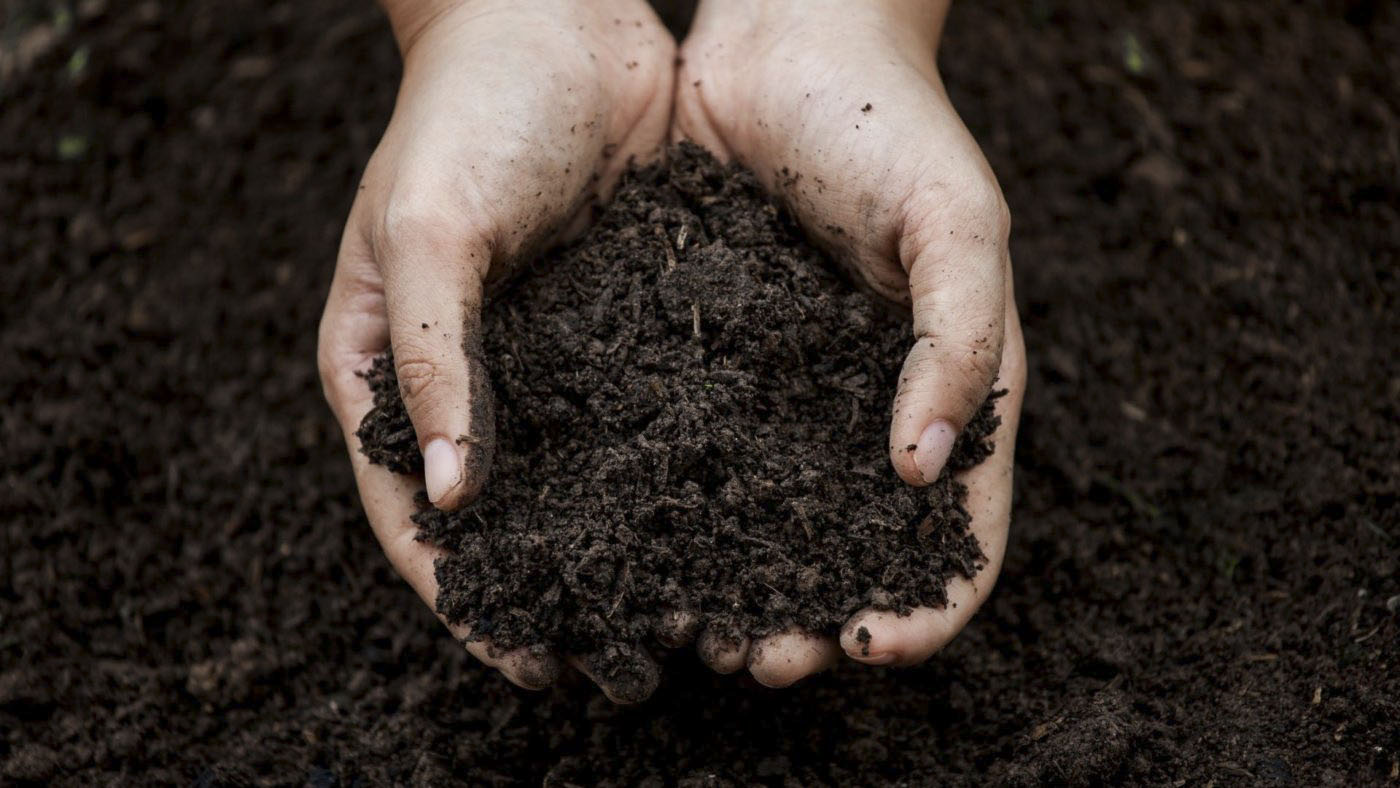
A nutritious diet is also a prerequisite for good health. Hasta actively works for positive development in the food industry, with higher nutritional content achieved through regenerative organic systems in which chemicals and artificial fertilisers are completely excluded.
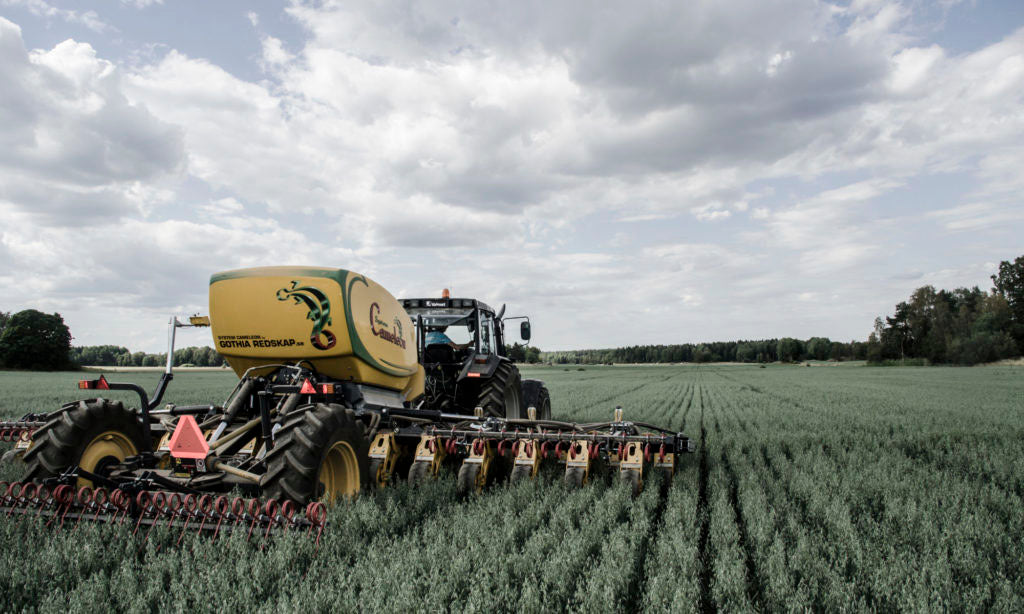
Through Hasta Food tech, Hasta Eco and Hasta Agri, we promote truly long-term food production. We use a fully circular cultivation system in which nature is our teacher. Through this circular approach, we promote positive development in agriculture, entirely without man-made chemicals. The cultivation system stores carbon dioxide in the soil, with a target of 2-3 tonnes per hectare.
What is our goal to achieve before 2030?
Our goal is to implement the circular approach across all our own operations. We also want to inspire other businesses to apply Hasta Eco's circular thinking by sharing our knowledge beyond our own organisation. In this way, our company contributes to positive environmental and health effects in a wider perspective too.
Target 7: Affordable and clean energy
The goal is to ensure access to electricity for everyone while promoting sustainable development despite an increased demand for electricity and electricity services.
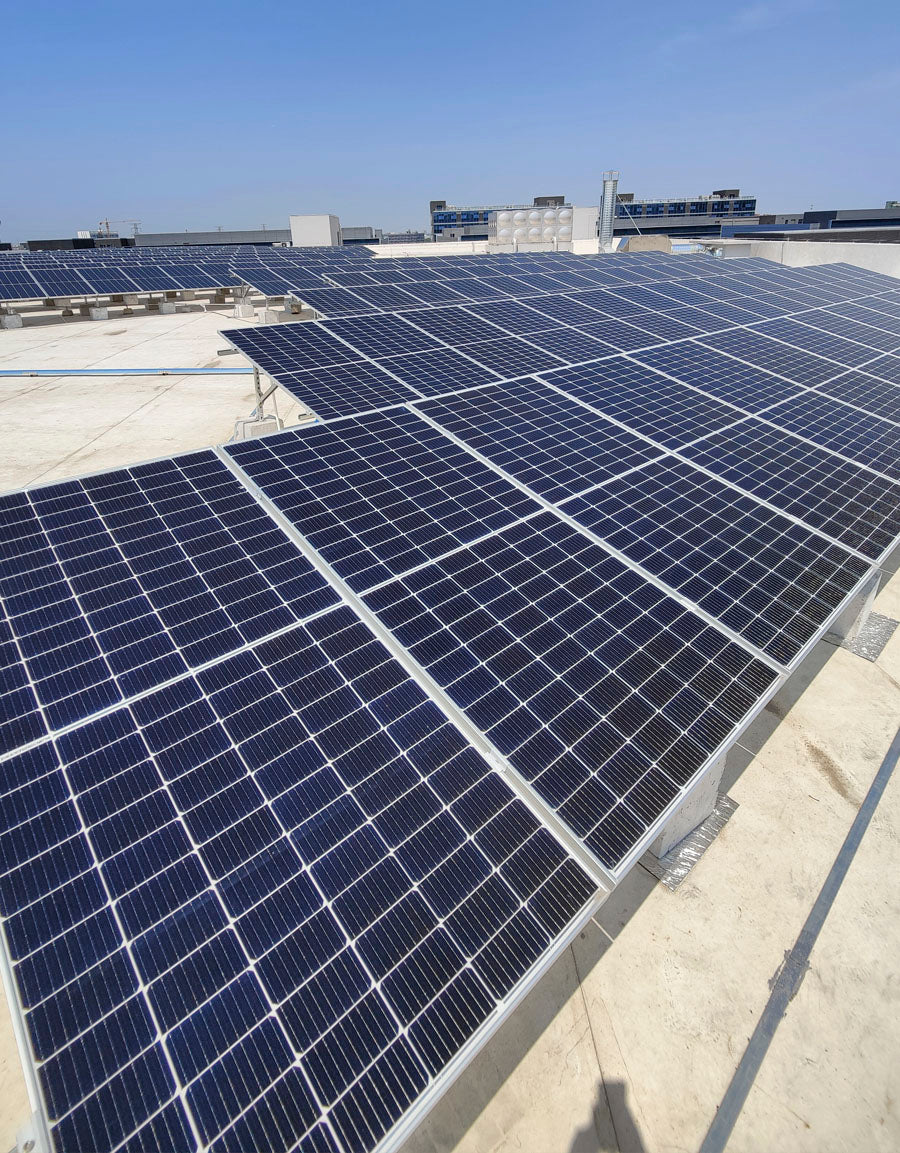
All our units operate in balance with our own solar cell electricity production. Our goal is to exclusively use modern technology with the lowest possible electricity consumption, such as LED lamps and electric cars, in our operations. In this area, we have already reached over 90% implementation level.
Our new factory in China, completed at the end of last year, is powered exclusively by solar energy, covering the entire energy needs for our Asian operations.
What is our goal to achieve before 2030?
Our goal is for all our operations to be completely self-sufficient in electricity production while our process is driven by the latest technology.

Target 12: Sustainable Consumption and Production
The goal is to ensure access to electricity for everyone while promoting sustainable development despite increasing demand for electricity and electricity services.
All our units are operated in balance with our own solar power generation. The objective is to excludeThe goal is to work towards more sustainable consumption and production.
For us, it is important to work to reduce our negative impact on the environment – both in the long term and in our day-to-day work. That is why we are continuously working towards offering more products that are kind to the environment. Our “Sustainable living” collection includes everything from curtains with fabric made from recycled material to smart products made from fabric offcuts and other environmentally friendly choices of material.
At Hasta, we take care of all our waste material through reuse or recycling. We donate a large part of surplus fabric material to schools and other organisations. This way, we ensure that this waste is reused for something productive.
We reuse our packaging material. In cases where this is not possible, recycling is an obvious part of the work process.
Within Hasta Food tech, all biomass is taken care of to become food or returned as nutrients to the cultivated soil. This process enables our circular way of working.
What is our goal to achieve before 2030?
100% of our products and packaging should be recyclable and, as far as possible, made from recycled material.nd to use modern technology with the lowest possible electricity consumption, such as LED lamps and electric cars, in our operations. In this area, we have already reached over 90% implementation level.
Our new factory in China, completed at the end of last year, is powered exclusively by solar energy, covering the entire energy demand for our Asian operations.
What is our goal to achieve before 2030?
Our goal is for all our operations to be completely self-sufficient in electricity production, while our process is driven by the latest technology.

Humans
As a company, we have a social responsibility to ensure secure employment and fair working conditions for all our employees at every level. Our operations in Asia are certified in accordance with the "Amfori BSCI" code of conduct. These operations are also certified according to the occupational health and safety standard "ISO 45001". We choose subcontractors who meet these standards.
Here in Sweden, Hasta has, since its inception, created work opportunities for people with various abilities and backgrounds. By providing work assignments on-site for people with disabilities who are unable to work outside their residential environment, we create the opportunity for meaningful employment for everyone. At our company, we value all people and treat each other with the same respect that we wish to receive ourselves.

Transport
When procuring new transport solutions, we always consider sustainability. We examine the company's environmental policy and work together to find the most environmentally friendly transport solutions when possible. All company cars within the Hasta Group are electric vehicles.
Our goal is to be able to climate compensate our transportation in collaboration with Hasta Eco before 2030. All end consumers who shop through Hasta Home should have the opportunity to climate compensate and contribute to a reduced climate footprint locally. Hasta Eco works with carbon sequestration in agricultural soil, which reduces our climate impact while creating conditions for nutritious, poison-free food.
By enabling our customers to purchase carbon credits through Hasta Eco, we contribute to reducing the negative environmental impact caused by transportation. We also believe that the ability to climate compensate locally, and thus contribute positively to the environment in one's local area, increases the willingness and motivation to make this choice.