



• Julia Nilstål
Spring is finally here, and with the lovely spring sunshine comes a greater need for good solar shading. Navigating all the blinds and shading products on the market can be a bit of a jungle, though!
Today, there is a wide variety of window types in our homes, with different conditions regarding the installation of blinds, the need for solar shading and suitable design.
Here you will find valuable tips on sun protection products for different types of windows – whether you prefer a classic roller blind, a decorative Roman blind, a functional pleated blind, or a clever solution with vertical blinds.
The classic roller blind
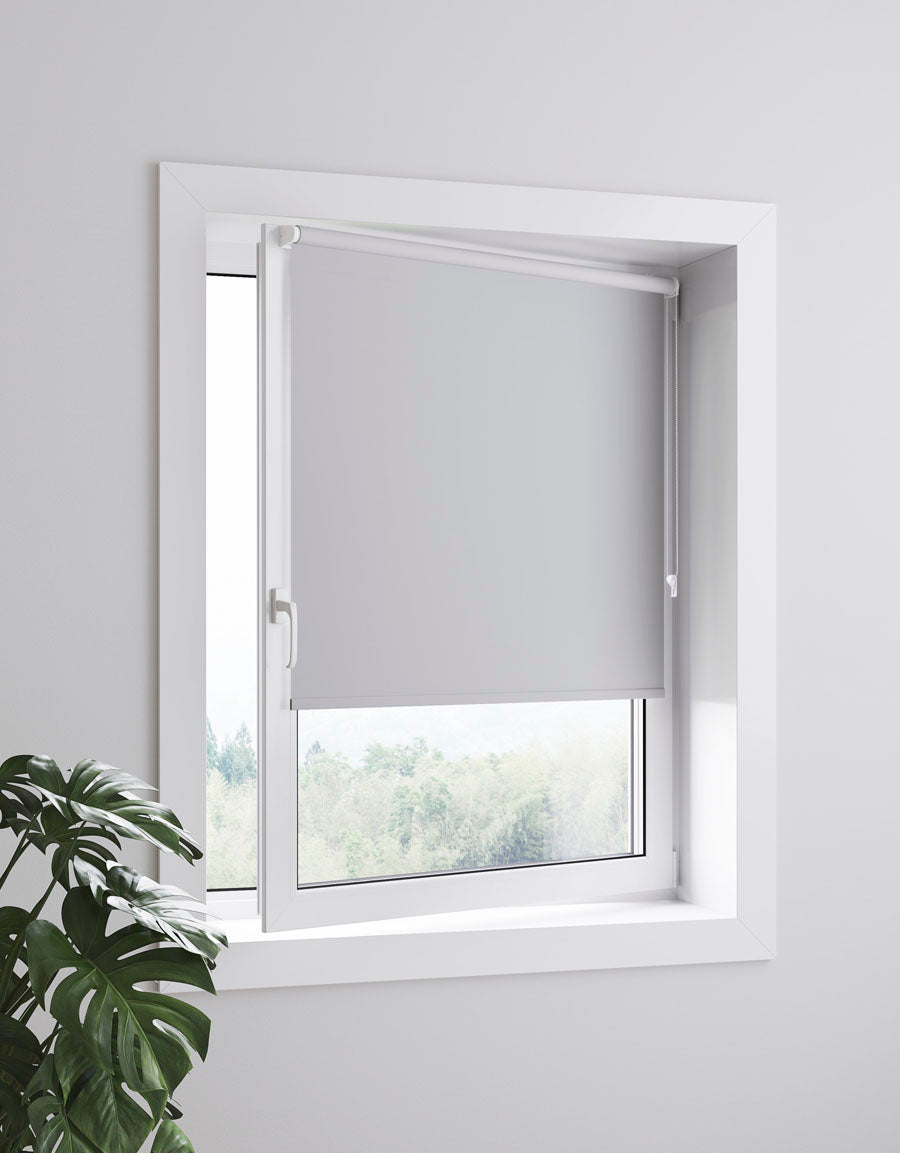
A standard roller blind is a flexible and discreet type of blind that suits most rooms. Most people have “standard” windows, where you can choose to mount the blind in the recess or outside it, on the wall or ceiling. How best to mount it depends on your solar shading needs.
If you only want solar shading, recess fitting works well. This is a neat way to mount the roller blind, as it won't be as prominent in the window.
If, on the other hand, you want to be able to darken the room, it's best to mount the roller blind outside the window recess and choose a roller blind slightly wider than the window. This is to minimise light transmission through the gaps that form at the sides of the fabric, as the fabric dimensions themselves are always slightly smaller than the total dimensions of the roller blind including brackets.
When it comes to the degree of solar shading, there is a wide range of fabrics to choose from. A blackout fabric is of course the best choice for the bedroom, while many people prefer some light transmission in other rooms.
Add descriptive text for this column
Add descriptive text for this column
Add descriptive text for this column
A blind can also be heat-reducing in windows that get a lot of sun, and there are several ways to keep the heat out with blinds. In the bedroom, where the heat can be especially disturbing during the summer months, you can opt for a roller blind with Titan fabric, which is the very best option for a dark, cool bedroom, as this fabric has a silver backing that reflects the sun's rays away.
A light-filtering fabric reduces direct sunlight without making the room feel closed in. A roller blind with screen fabric goes a step further for more light transmission, as it appears transparent, and is an excellent choice for rooms where you want solar shading without losing the view. If you want the best of both worlds, choose Day&Night – the fabric that lets you vary the light transmission with both an open and a closed position.
Add descriptive text for this column
Add descriptive text for this column
Add descriptive text for this column
The pleated blind – a trendy sun protection solution
If you're looking for a modern sun protection product that is both stylish and functional, a pleated blind might be for you.
A pleated blind can be mounted in the same way as a roller blind, but differs slightly in its design. A pleated blind is often a popular choice for solar shading in kitchens and also for privacy in bathrooms, where you also want to let in as much light as possible.
The pleated blind is characterized by its accordion-pleated fabric and is available in several different weaves. The so-called honeycomb fabric is also effective for heat reduction, where the double fabric creates a heat-insulating air gap.
Add descriptive text for this column
Add descriptive text for this column
Add descriptive text for this column
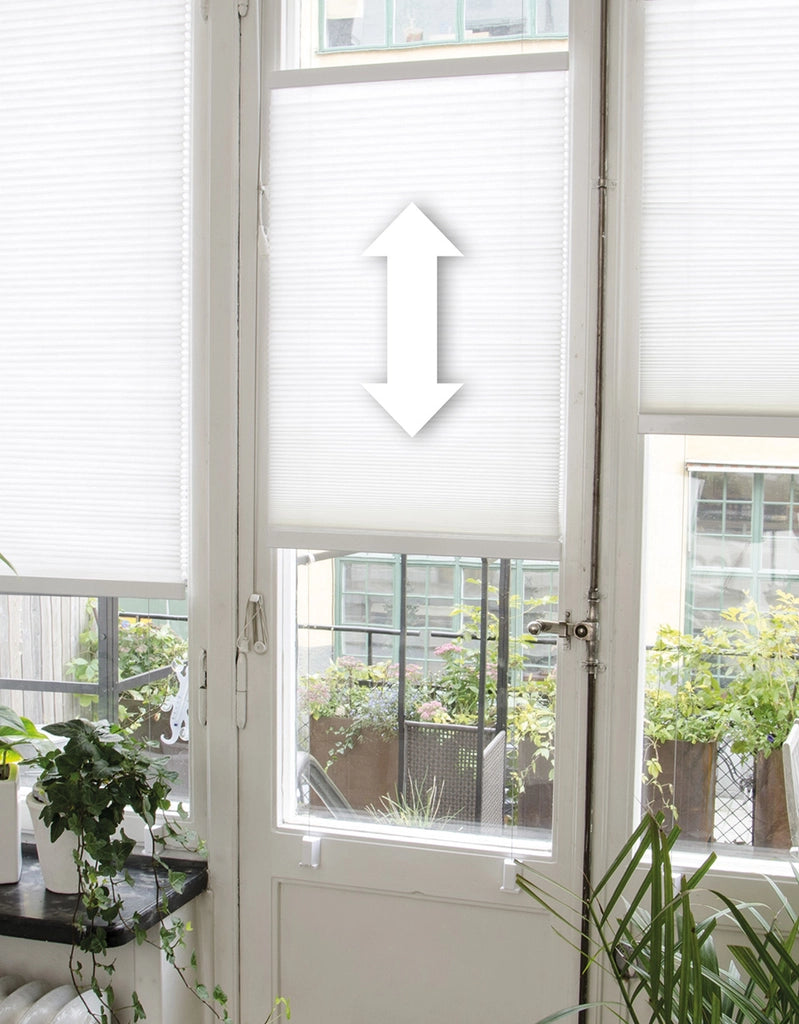
In larger window sections, you often have inward-opening windows and perhaps also a balcony door that opens inwards. A regular roller blind that you mount on the wall above the window or in the window recess can then be in the way if you want to open the window/door.
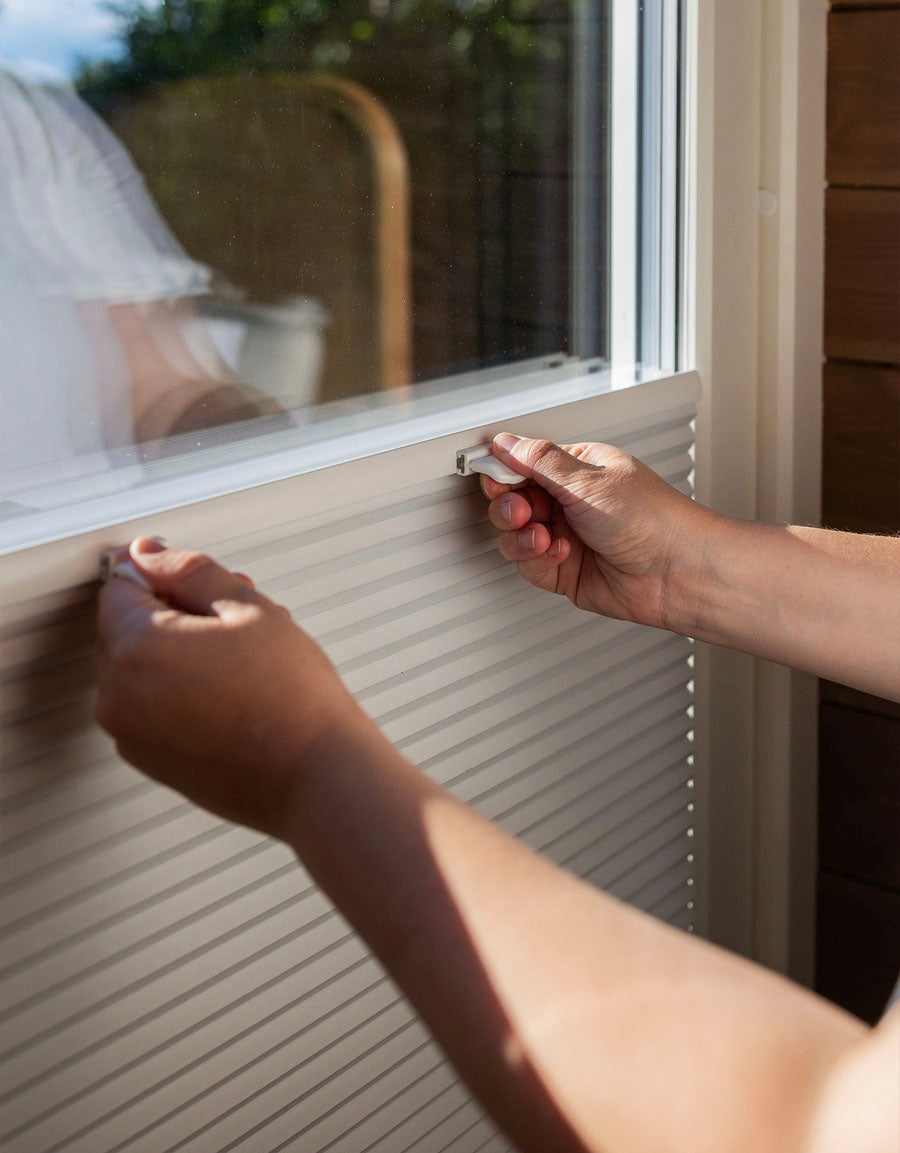
With no-drill roller blinds that are mounted on the window sash itself, you can instead fit a blind on each individual window. These models are clamped or nailed onto the window frame itself, which means the roller blind moves with the window when it is opened.
For some windows, blinds that are fitted with traditional screw brackets are simply not an option. This might be the case in a rented flat where you are not allowed to damage the window with screw holes, or in a modern house with aluminium frames around the windows that are part of the load-bearing structure and therefore must not be drilled into. Or you may simply not want to make unnecessary screw holes in the window for aesthetic reasons, or you may want a flexible blind that can be taken down if you don't need solar shading all the time.
A friction-fit blind that is held in place by tensioning it in the window recess is a perfect alternative, as it leaves no marks on the window and can be put up and taken down quickly and easily when needed. The spring-loaded mechanism has mounting plates that grip the wall when you screw and expand the roller blind, so it stays in place just as securely as a roller blind with screw brackets.
Some windows are designed in a way that makes it difficult to fit a blind inside the recess, for example where a vent restricts the space.
Roman blinds can be a good choice here. A Roman blind is both a stylish and a functional choice of blind, as it acts as a decorative curtain valance in the window that you can also easily raise and lower as needed. Choose a dimout Roman blind for rooms such as the bedroom, where it's important to be able to make the room completely dark. In these cases, it's a good idea to choose a Roman blind with a greater width than the window itself, to minimise light transmission from the sides. If, on the other hand, solar shading is your main priority, you can choose a sheer or light-filtering fabric for your Roman blind. This minimises direct sunlight without blocking it completely and losing the daylight.
For really large windows, it can be difficult to find a blind that is big enough. In that case, vertical blinds are a good choice. A vertical blind consists of free-hanging, separate slats on a track, and light transmission is easily adjusted by tilting the slats to the desired position.
A vertical blind is also a good choice of blind for a conservatory or a glazed balcony, where the sun often beats down and it can get very hot. Adjust the solar shading to suit the weather and your preferences, switching between open and closed positions or a combination of both. You can also draw a vertical blind fully to the side when you want to open up and enjoy the view.