



GUIDE
Curtains for the bedroom
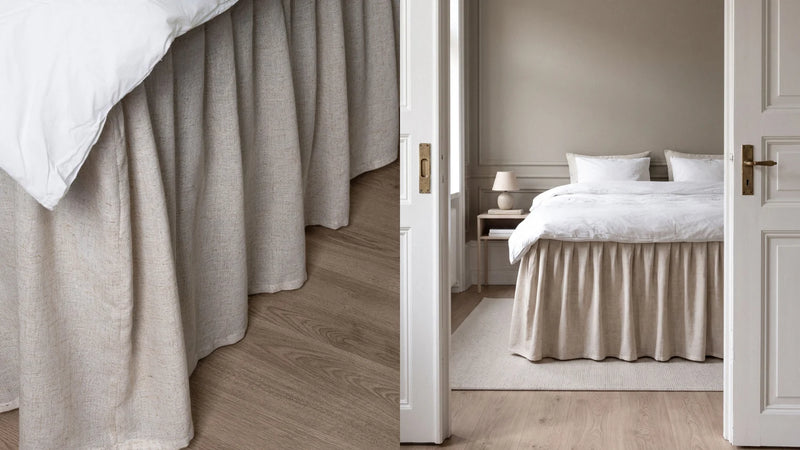
In the bedroom, we want to create a calm, relaxed atmosphere with room for both sleep and rest. Curtains in the bedroom are often used to soften the light, frame the room and create a cosier feel – whether you prefer a subdued bedroom or simply want to soften the overall look. Several of our curtain fabrics can also be ordered as a bed valance when you want to create a cohesive, warm look in the bedroom.
Dimout curtains can help shut out light and create a more subdued sleeping environment, while other solutions can complement them if needed, depending on the conditions in the room.
Here we've gathered inspiration and guidance to help you find curtains that suit your bedroom and the feel you want to create. For a closer look at dimout and different solutions, there is a separate guide to dimout.

Double curtains in the bedroom
Double-layered curtains in the bedroom are both stylish and functional. The inner layer, often sheer curtains, reduces how much people can see in while letting in soft daylight. The outer layer is often made up of dimout curtains, which are drawn in the evening to dim or shut out the light and create a more restful atmosphere. The combination not only offers practical benefits but also adds a luxurious hotel feel to the room – and a cosier overall impression.

Muted colours for a calm atmosphere
By choosing muted, soft colours, you can create a more peaceful feel in the bedroom. Go for earthy tones that contribute to a harmonious look. Beige curtains are a popular choice in the bedroom, but green and blue can also add more colour to the room while still creating a calm feel. Here it is often easier to experiment with darker shades than in other rooms in the home, and they can contribute to a more inviting and subdued overall look.

Velvet curtains for a cosy feel
If you don't need maximum dimout but want curtains with a heavier, cosier look, velvet can be a stylish choice of material for your bedroom curtains. Thicker fabrics often give the room a warmer feel and help create a more framed overall impression. Many people also find that they soften the acoustics and reduce draughts around the window, creating better conditions for a comfortable bedroom.

The Roman blind – a stylish compromise
Roman blinds are a popular choice in the bedroom when curtain panels feel too dominant but roller blinds or Venetian blinds feel too austere. They combine a soft, decorative look with the ability to adjust light transmission as needed. Dimout Roman blinds are often used to create a more subdued sleeping environment, while the room keeps its cosy feel.
Get inspired by our customers


Common questions about curtains in the bedroom
What kind of curtains are suitable for the bedroom?
Many types of curtains can work in the bedroom, depending on style and needs. Bedroom curtains are often chosen to soften the light and create a cosier feel – sometimes with dimout curtains, but also with thicker fabrics such as velvet. For a more minimalist look, Roman blinds can be a lovely alternative that frames the window and makes it easy to adjust the light transmission.
How much light do dimout curtains block out in the bedroom?
How much light dimout curtains block out in the bedroom depends on the fabric's properties and the window's conditions. Details such as how the curtains are installed can also affect whether light can seep in around the edges. For a more detailed review of dimout and various solutions, see our dimout guide.
Can bedroom curtains block out noise from outside?
Thicker curtains, such as dimout curtains or velvet, can help dampen sound and create a calmer bedroom environment. How much of a difference this makes depends on the fabric's properties, how the curtains are positioned, and how much textile is used at the window.
Do curtains in the bedroom provide privacy?
Sheer curtains can provide some privacy in the bedroom while still letting in daylight. In the evening, when it's dark outside and lights are on inside, privacy is often perceived as being reduced. For more privacy, thicker curtains or double layers are often used, where a sheer inner curtain is combined with thicker curtains that can be drawn when needed.
What determines how dark the bedroom gets?
How dark your bedroom gets depends on several factors, such as the window's characteristics, light transmission and the type of curtain or blind you use. For a more detailed look at dimout and different solutions, see our guide to dimout.